
Thinking About Light in Shadowdark
Light is one of the quiet tricks Shadowdark pulls on you. Not cinematic light, not “for atmosphere only” light, but real, anxious, constantly-depleting light. The kind that makes players glance at the clock and ask how many minutes they have left before everything goes wrong.
The Core Rules touch on lighting and darkness in several places (pp. 34, 84, 110), but the lesson really only sinks in during play. Light is time. Time is safety. And once the light is gone, you’re not just blind—you’re late.
Late to react, late to flee, late to survive.
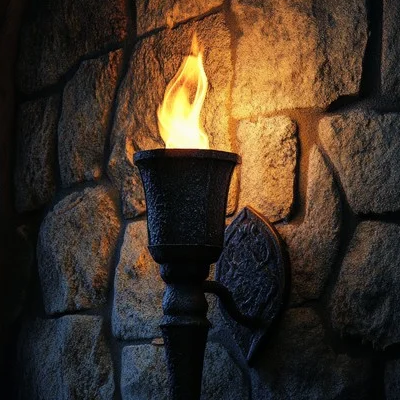
Most of us grew up assuming a torch is just a torch. You light it, it works, end of discussion. Fantasy has trained us to picture the classic movie torch: a blazing bundle of pitch-soaked rags tied to a stick, throwing dramatic shadows on stone walls. Historically, though, torches like that are kind of terrible. They smoke constantly, they stink, they drip burning pitch, and they’re eager to go out the moment the wind picks up or someone stumbles. They work for processions or signals, but they’re not ideal for careful exploration underground.
Shadowdark actually treats torches honestly. They’re cheap, bright enough, and disposable, but they’re loud in all the wrong ways. They sputter and crackle. Smoke gathers under low ceilings. The smell carries through halls, tunnels, and caverns. Whatever is down there knows you’re coming, long before you see it.
Candles feel safer. Quieter. More civilized. But not all candles are created equal. Most everyday candles are made from animal tallow, which burns poorly and smells unmistakably like cooked fat. Beeswax candles burn cleaner and brighter, but they’re expensive enough that carrying them into a dungeon quietly says something about your character’s background—or their priorities. And candles so not illuminate far enough to let you see what’s coming, or react soon enough. Late again.
One small detail that tends to delight and horrify players: animals love animal-fat candles. Dogs, rats, pigs—if it smells edible, it probably is. A poorly stored rushlight or candle can vanish between scenes, and suddenly the party is standing in the dark wondering what just happened. Candles are fragile, easy to snuff, and not much help in large spaces, but they’re quiet and compact, and sometimes that’s enough.
Modern players might assume glass is everywhere. The medieval world disagrees. Glass lantern panes, candle screens, and fancy housings are rare and expensive, plus they break or shatter easily. A lantern isn’t just better than a torch—it’s valuable. It’s enclosed, more resistant to wind, and can be shuttered to hide the light, but it also paints a target on the party. Someone in the dungeon will want it. That’s good Shadowdark design. Light shouldn’t just solve problems. It should create new ones.
Bioluminescent light doesn’t belong to history, but it belongs perfectly in Shadowdark. If something glows underground—fungus, insects, strange stones—it shouldn’t feel comforting. It should feel wrong. Cold. Watched. Free light is never free. If the dungeon offers illumination without cost, the bill is coming later.
It’s also worth remembering how ordinary people live with darkness in our medieval and Dark Age RPG settings. Most homes don’t have multiple light sources burning all night. A single hearth fire does almost everything: heat, cooking, light. Everyone and almost everything smells of smoke. Windows are small, shuttered, or nonexistent. Once the fire burns low, the house goes dim fast. Darkness isn’t dramatic in this world. It’s normal. Your party stands out not because they can see, but because they bring light with them, and that makes them visible.
Seasonal darkness matters too. If your setting is even moderately northern, winter should be oppressive. Daylight shrinks. Travel takes longer. Mistakes compound faster. Shadowdark really sings when the sun is unreliable and the party has to plan around sunset, weather, and the simple fact that darkness is winning more hours of the day than light ever will. Viking Age settings like Gods of the Forbidden North by Rob Alderman deliver this feeling.
Every light source leaves a trace. Smoke stains ceilings and throats. Smell travels farther than sound. Burning animal fat attracts scavengers, predators, and worse. This doesn’t need complex mechanics—just consistency. If the party lights a torch in a tight tunnel, something smells it. If they burn rushlights all night, something eventually comes to investigate. Light keeps them alive, but it also tells the dungeon where they are.
Shadowdark doesn’t punish players for using light. It punishes them for assuming light is harmless. Every flame is a decision. Every minute is spent. And eventually, whether by wind, water, greed, or simple bad luck, the light goes out. When that happens, the dungeon doesn’t change. The players do.
DOWNLOAD (FREE) Shadowdark Light Sources Table

You can follow me on YouTube @EruditeDM, or on X @EruditeDM. Feel free to email me at EruditeDM@gmail.com.
And please sign up for our mailing list. Thanks again!